
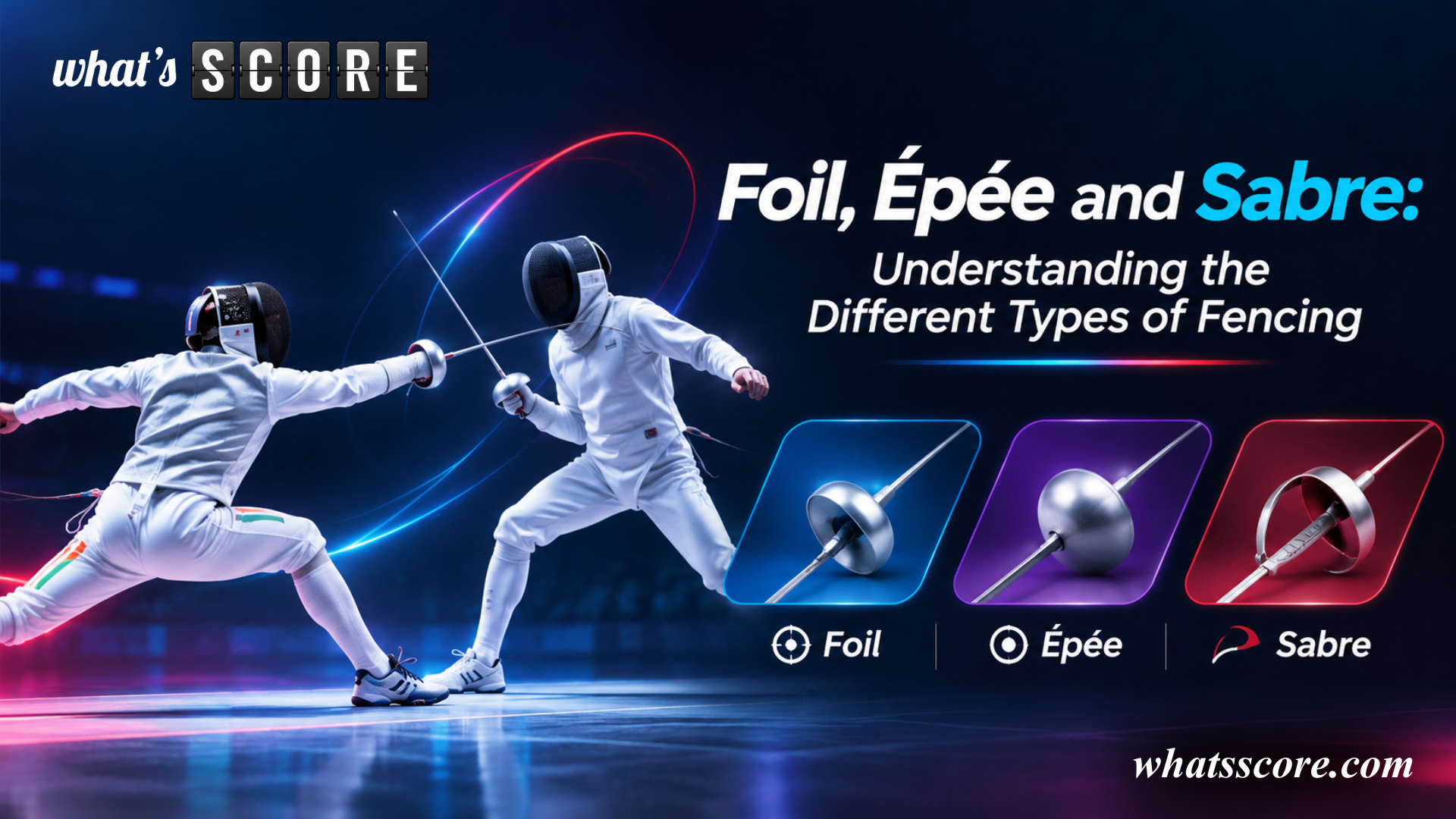
One sword targets the torso. Another can score anywhere. The third is all about lightning fast attacks!
Three completely different challenges, yet all belong to the same sport.
That’s what makes the Types of Fencing so exciting! While Foil, Épée and Sabre may look similar, their target areas, scoring methods and attacking techniques make every bout a unique battle.
What Are the Three Types of Fencing?
Modern fencing has three disciplines, each demanding a different approach.
| Feature | Foil | Épée | Sabre |
| Target area | Torso | Entire body | Above the waist |
| Valid contact | Weapon tip | Weapon tip | Blade edge or tip |
| Right of way | Yes | No | Yes |
| Main skill | Precision | Timing | Speed |
Quick Fact:In Épée, even the opponent’s foot can be a valid target! In Foil, a touch to the leg doesn’t score.
How Does Each Fencing Weapon Change the Game?
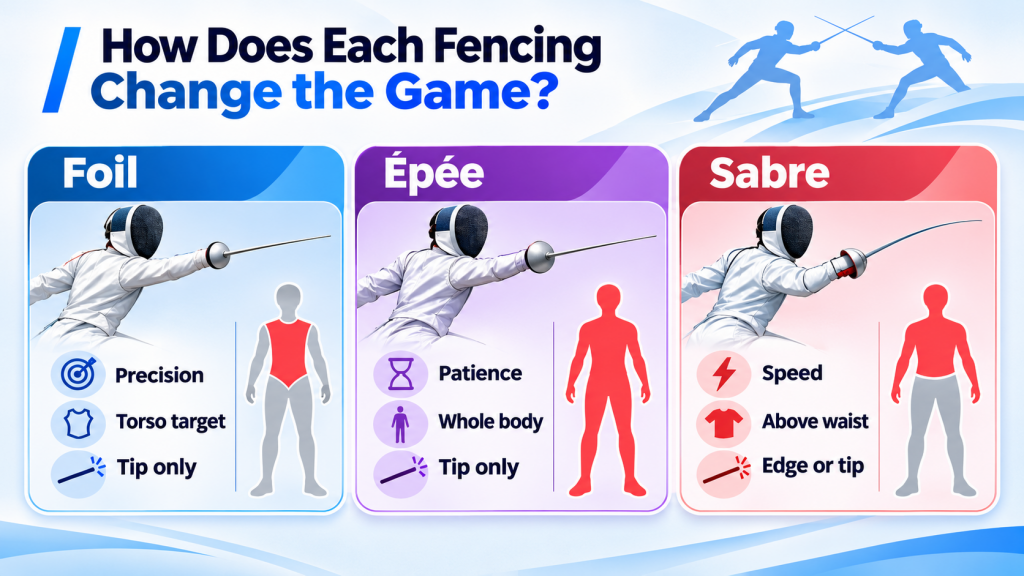
1. Foil Fencing: Accuracy Wins
Imagine spotting a tiny opening in your opponent’s defence. Can you reach it before they block?
That’s the challenge of Foil Fencing.
Players must land the weapon’s tip on the valid torso area. Random attacks won’t help much because the right of way rule determines who receives a point when attacks conflict.
The winning approach: Control your movements, create openings and strike accurately.
2. Épée Fencing: Patience Pays Off
What if every part of your body became a target?
Welcome to Épée Fencing, where even a small mistake can cost a point.
With no right of way rule, players focus on careful distance control, smart counterattacks and well timed touches.
The winning approach: Watch your opponent, avoid unnecessary risks and attack at the right moment.
3. Sabre Fencing: Speed Takes Over
Blink, and you might miss the action!
Sabre Fencing allows valid touches above the waist using either the blade’s edge or tip.
Explosive attacks, quick footwork and rapid defensive reactions make this discipline particularly fast.
The winning approach: React quickly, maintain attacking priority and stay ready to defend.
What Happens When Both Fencers Hit at Once?
Here’s where Fencing Rules get interesting!
Understanding how different sports apply their rules and points becomes easier when you explore sports rules and scoring systems.
Two fencers attack. Both scoring lights appear. Who gets the point?
Remember This
- Foil and Sabre: The referee uses right of way, also called attack priority, to decide who scores.
- Épée: Both players can earn a point when valid touches occur almost simultaneously.
That small difference can completely change the outcome of a close bout.
How Does the Fencing Scoring System Work?
The Fencing Scoring System usually follows two standard individual competition formats.

| Bout type | Winning target |
| Pool rounds | 5 touches |
| Direct elimination | 15 touches |
A touch earns one point when it satisfies the weapon’s rules.
Did You Know?
In standard individual direct elimination bouts, Foil and Épée have three periods of three minutes. Sabre uses a break when one fencer reaches eight touches.Some age group competitions follow different formats.
Which Fencing Weapon Should Beginners Choose?
Not sure where to start? Think about what excites you most.
- Love accuracy and planned attacks? Try Foil.
- Enjoy patience and clever timing? Choose Épée.
- Prefer fast action and quick reactions? Explore Sabre.
There’s no single best weapon. Trying each discipline helps you discover your strengths.
From Fencing Action to Tournament Management
An exciting fencing competition needs more than talented athletes.
Registrations, competition draws, scores and results must all stay organised.
Organisers can also use online tournament management to manage competitions, coordinate participants and keep match information organised.
What’s Score helps tournament organisers manage these activities through a web based platform with mobile access and live results.
The platform has supported fencing events such as the Telangana Selection Trials for Khelo India Youth Games 2026.
Learn more through An Alternative to Fencing Time for Managing Fencing Tournaments.
Frequently Asked Questions
Épée allows valid touches across the entire body, including the hands, legs and feet.
Foil uses tip touches to the torso, while Sabre allows edge or tip touches above the waist.
Yes. What’s Score supports fencing competitions featuring Foil, Épée and Sabre, with online event information and results.
Further Reading: Want to understand the differences between the three fencing disciplines in more detail? Explore the Olympics guide to Foil, Épée and Sabre fencing.