
Imagine watching your first tennis match. A player wins one point, and the umpire calls “15.” Another point makes it “30.” One more, and suddenly it is “40.”
But why not simply count 1, 2, 3?
The Tennis Scoring System may seem confusing at first, but its unusual numbers come from a tradition that has survived for centuries. Once you understand how it works, following a tennis match becomes much easier.
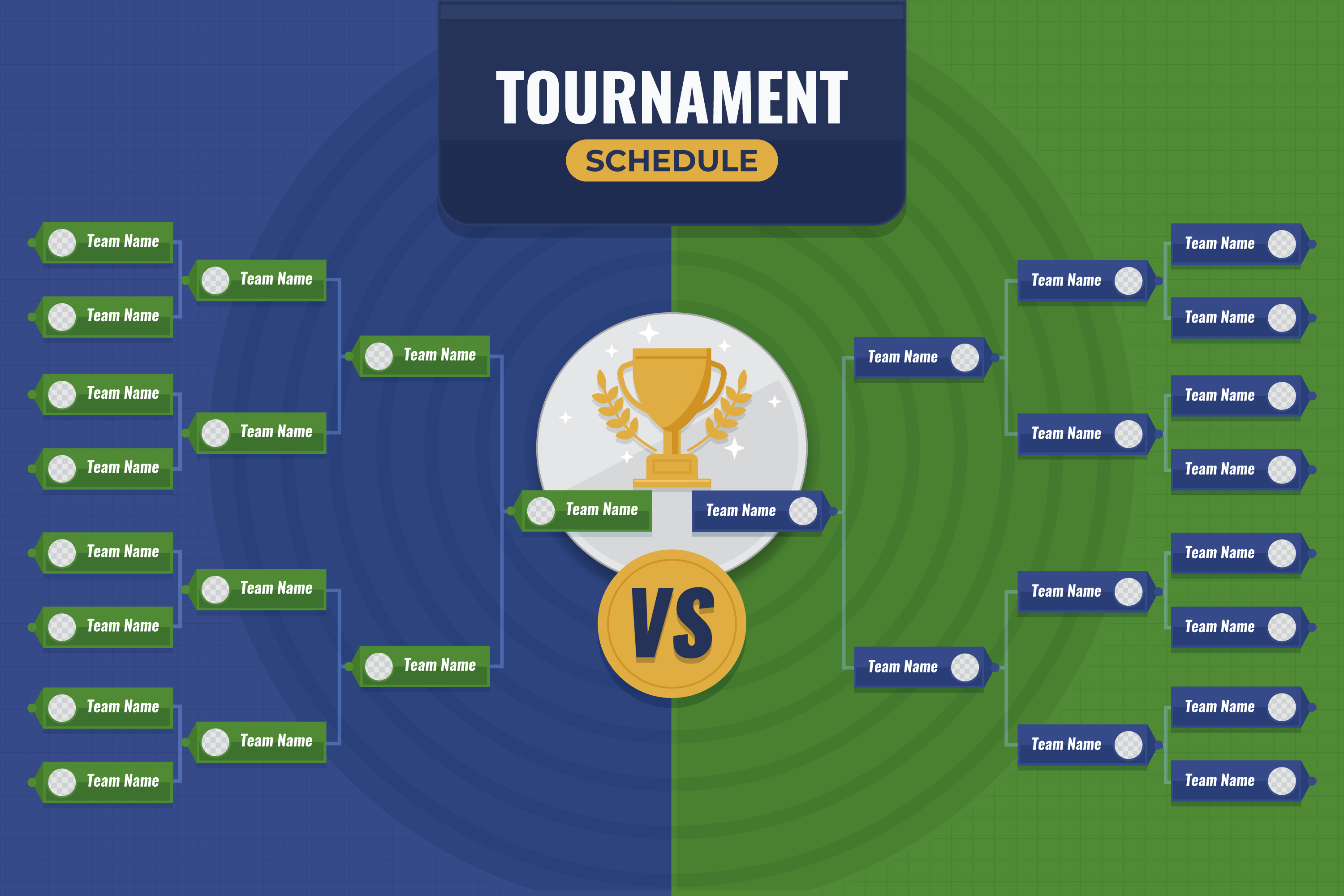
Understanding how players are placed in a tournament is equally useful, so explore what top seed means in tennis to learn how rankings influence tournament draws.
Why Does Tennis Use 15, 30 and 40?
Tennis developed from older European ball games, particularly jeu de paume, which was played in medieval France.
Although historians have several theories about the unusual scoring numbers, the exact origin of 15, 30 and 40 remains uncertain.
The Clock-Face Theory
One popular explanation connects tennis scoring to a clock.
Imagine a clock divided into four quarters:

- First point – 15
- Second point – 30
- Third point – 45
- Fourth point – 60, completing the game
This offers a possible explanation for why tennis counts in fifteens rather than ordinary numbers.
However, the clock-face explanation is a historical theory, not a proven fact.
Why Did 45 Become 40?
If the original sequence followed 15, 30 and 45, why does modern tennis use 40?
“One theory suggests that 45 gradually became 40 because it was easier to say during matches. However, historians have not established one definitive explanation for this change.”
Did You Know?
A tennis player does not earn 15 actual points for winning a rally. The numbers 15, 30 and 40 are simply traditional names for the first three points in a game.
How Does the Tennis Scoring System Work?
Understanding the numbers is simpler than remembering their history.
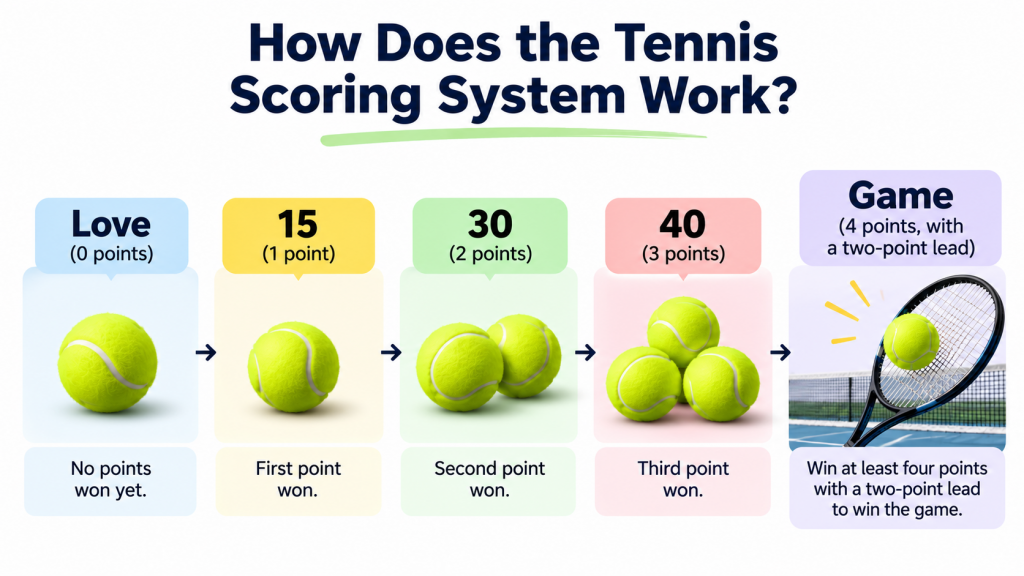
| Points Won | Tennis Score |
| 0 | Love |
| 1 | 15 |
| 2 | 30 |
| 3 | 40 |
| 4 | Game, if ahead by at least two points |
A player generally needs at least four points to win a game, with a two-point lead over the opponent.
For example, if the server has won two points and the receiver has won one, the umpire announces 30 – 15.
The server’s score is always called first.
For a more detailed explanation of tennis points, games, sets and tie-break rules, refer to the official USTA guide to tennis scoring rules.
What Happens When the Score Reaches 40 – 40?
This is where tennis becomes especially interesting.
When both players reach 40–40, the score becomes deuce. From this point, a player must win two consecutive points to win the game.
Deuce and Advantage Explained
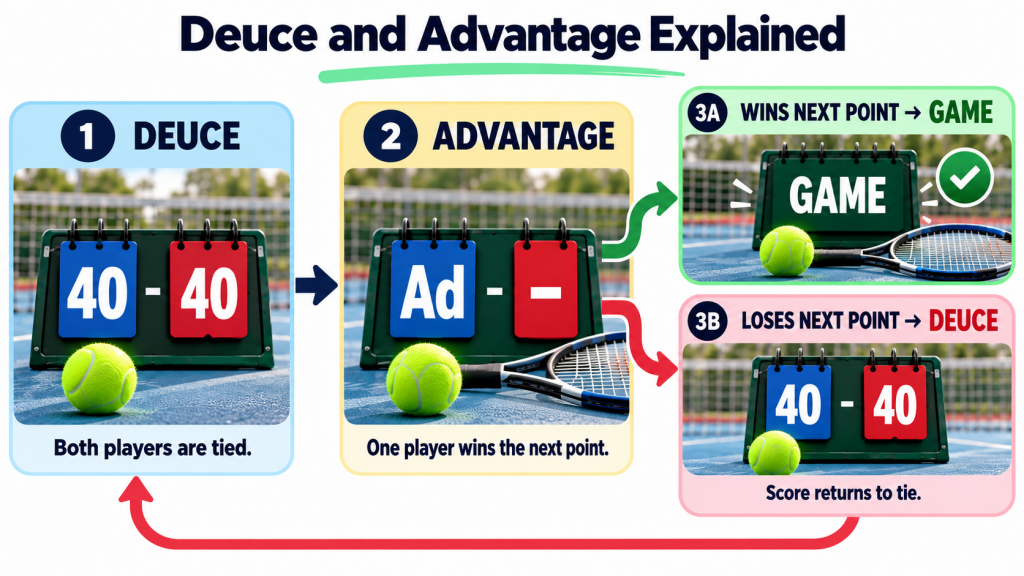
- Deuce: Both players reach 40–40, or the score returns to a tie after an advantage.
- Advantage: One player wins the next point and takes the lead.
- Game: The player with advantage wins another point.
- Back to Deuce: If the player with advantage loses the next point, the score returns to deuce.
This rule creates some of tennis’s most exciting moments because a single game can continue through several deuces.
Do Tennis Tie-Breaks Use 15, 30 and 40?
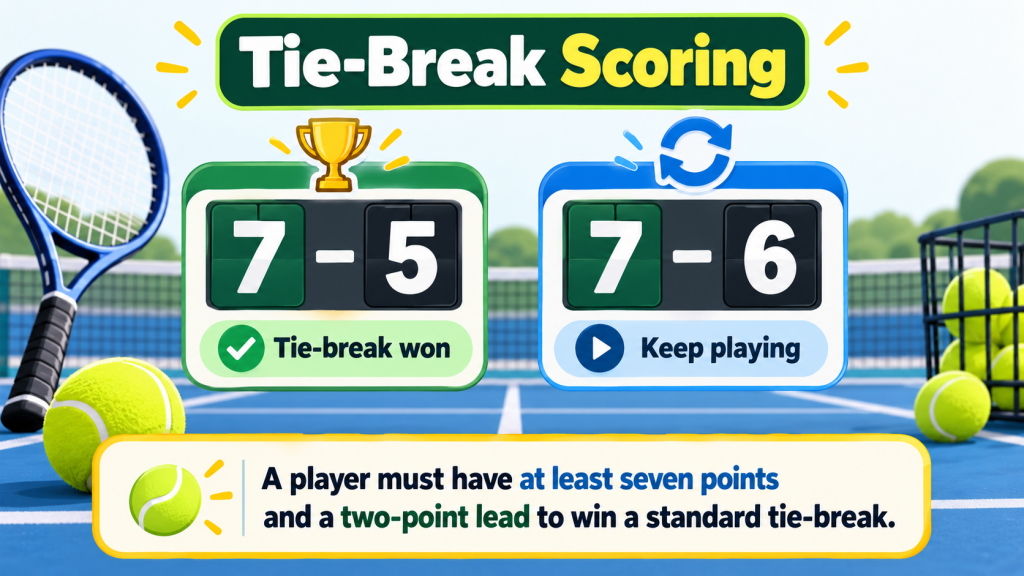
No. A tie-break uses ordinary numerical scoring: 1, 2, 3, 4 and so on.
In a standard tie-break, the first player to reach at least seven points with a two-point lead wins.
Tie-breaks can also influence the outcome of closely contested tournament matches, making it important to understand how tennis tournament seeding works and how players progress through the draw.
A Simple Way to Remember Tennis Scores
Next time you watch tennis, remember this sequence:
Love → 15 → 30 → 40 → Game
At 40 – 40, it’s Deuce. Win two consecutive points to take the game under standard advantage scoring.
You do not need to memorise centuries of tennis history to enjoy the sport. Just follow the points, understand the two-point rule and watch how every rally changes the match.
Follow Every Point with What’s Score
Make tournament management and live scoring easier with What’s Score, your digital sports management platform.
Book a Free Demo and discover how What’s Score works for your tournaments.